
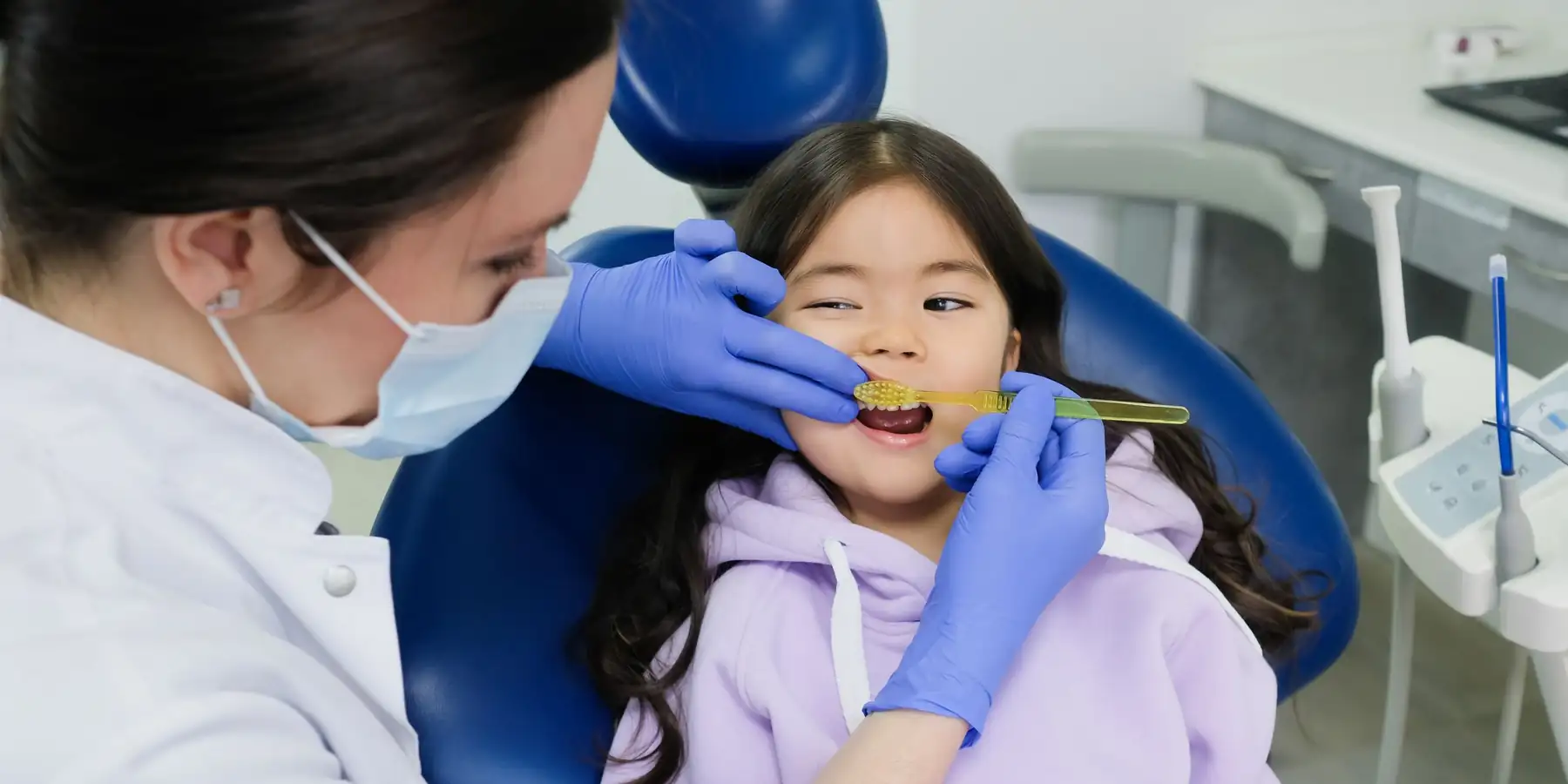
Your child's first orthodontic visit
The Canadian Association of Orthodontists says age seven. Here is what actually happens at that appointment, and why most children need nothing done.
June 18, 2026
Parents are often surprised when we say seven. It sounds early. Most seven-year-olds still have a mouthful of baby teeth. But the recommendation from the Canadian Association of Orthodontists is deliberate, and it is not about starting treatment.
Why age seven
By about seven, the first permanent molars and incisors have usually come through. That gives us the first real look at how the bite is forming: whether there is room for the adult teeth still to come, whether the upper and lower jaws are meeting properly, and whether the upper arch is wide enough.
Crucially, the jaw is still growing. Growth is a tool you only get once. A narrow upper jaw at seven can often be widened gently with an expander; the same narrow jaw at seventeen may need a surgical procedure to achieve the same width.
What we look for
- Crowding, or too little space for the permanent teeth
- Crossbite: where upper and lower teeth meet the wrong way round
- Protruding front teeth, which are more prone to injury
- Difficulty chewing or biting
- Habits such as thumb-sucking that affect how the jaw develops
- Baby teeth lost unusually early, or hanging on unusually late
Most children need nothing yet
This is the part worth emphasising. The majority of children we see at seven do not need treatment. What they get is a baseline and a plan to be monitored as they grow, so that if something does need doing, it happens at the moment it will do the most good.
If your child does need early treatment, it is usually short and targeted (an expander, or partial braces) rather than a full course of orthodontics. The goal is to make any later phase simpler.
What the appointment costs
Nothing. New patient consultations at our practice are complimentary, including the exam and initial imaging. If your child is not ready for treatment, we will tell you so plainly and see them again as they grow.
Thinking about treatment for you or your child?
Your first visit is on us: a full exam and an honest answer.